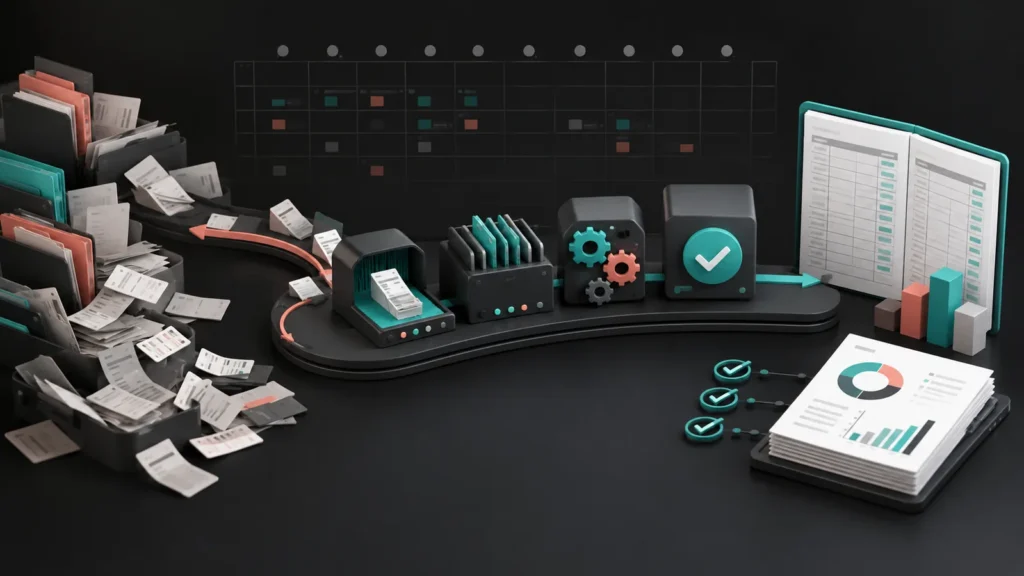
Behind on Your Books? Here’s What Catch-Up Bookkeeping Actually Looks Like

Home Bookkeeping Crypto Tax Payroll About Resources Blog Contact Client Portal Get Started ☰ Home› Blog› Behind on Your Books? Here’s What Catch-Up Bookkeeping Actually Looks Like Bookkeeping Behind on Your Books? Here’s What Catch-Up Bookkeeping Actually Looks Like By Jamie Waters, QuickBooks Advanced ProAdvisor & Crypto Tax Specialist • June 2025 • 10 min read If your books haven’t been touched in months — or years — here’s exactly what the cleanup process involves, how long it takes, and what you’ll need to get started. First: What “Catch-Up” Actually Means Catch-up bookkeeping (also called cleanup bookkeeping) is the process of bringing a set of books current after they’ve been neglected, abandoned, or done incorrectly. The starting point could be three months behind, two years behind, or anything in between. This is not the same as monthly bookkeeping. Catch-up involves reconstructing a historical record — often with incomplete data, missing source documents, and bank feeds that have expired or been disconnected. How Bad Is Bad? What We Usually Find Most catch-up files fall into a few patterns: Bank feed imports with no categorization: Transactions were pulled in but never coded. The P&L is meaningless. Mixed personal and business: Owner used the business account for personal expenses, or vice versa. Every transaction needs review. Duplicate entries: Transactions recorded manually AND through the bank feed. Revenue and expenses are both overstated. Forced reconciliations: Someone “balanced” the accounts by adding adjustment entries instead of finding the actual discrepancy. Errors are buried but compounding. Prior bookkeeper’s mystery accounts: Unexplained balances in accounts that don’t match anything in reality. The Catch-Up Process, Step by Step Every engagement is different, but the general sequence is: Bank and credit card statement collection. We need statements for every account, every month in the period. This is the source of truth — not the bank feed. Diagnostic review. Before touching anything, we assess the existing file — what’s there, what’s wrong, what’s salvageable. This prevents doing work twice. Transaction coding. Every uncoded or miscoded transaction is reviewed and categorized correctly. This is the core of the work and usually the most time-consuming part. Reconciliation by month. We reconcile each bank and credit card account against statements, month by month, from the last clean date forward. No forced reconciliations — if something doesn’t balance, we find out why. Adjusting entries. Depreciation, owner draws, loans, payroll liabilities — anything that needs to be booked correctly to reflect actual financial position. Final review. Spot-check the P&L and balance sheet against what you know about your business. The numbers should make sense. How Long Does Catch-Up Take? Timeline depends on how far behind you are, how many accounts you have, and how complete your records are. A rough guide: Months Behind Typical Timeframe 1–3 months 1–2 weeks 4–6 months 2–4 weeks 7–12 months 4–8 weeks 1–2 years 6–12 weeks 2+ years Quoted after diagnostic These are general estimates. Engagements with significant transaction volume, multiple entities, or complex payroll situations take longer. What You’ll Need to Provide To do this work, we need access to: Your QuickBooks Online file (accountant access) Bank and credit card statements for every account in the period (PDF or exported CSV) Payroll reports if payroll ran during the period Loan statements if you have business debt Any major purchase receipts or expense documentation you have Missing documents are common and not a dealbreaker. We work with what exists and flag what’s truly needed vs. what’s nice to have. What You Get at the End When catch-up is complete, you have a QuickBooks file that’s fully reconciled through the last period, a clean chart of accounts, and financial statements you can actually use — profit and loss, balance sheet, and cash flow. You can hand this file to a CPA or tax preparer and it will hold up. We also flag anything that needs attention going forward: recurring miscategorizations, owner draws that need documentation, payroll issues, or anything else that, if uncorrected, will create the same problem next year. Starting From Here: The Diagnostic Before we quote a catch-up engagement, we run a Bookkeeping Diagnostic. This is a $500 flat-fee review of your QBO file that tells us exactly what’s wrong, how bad it is, and what fixing it will realistically involve. It prevents surprises — for both of us. $500 FLAT Behind on Your Books? Start Here. A Bookkeeping Diagnostic is the fastest way to understand what you’re actually dealing with. We’ll review your QBO file and give you a written report — what’s wrong, what it’ll take to fix it, and what you can ignore. Get My Bookkeeping Diagnostic Not sure where to start? A $500 diagnostic gives you a clear picture of what’s wrong and exactly how to fix it. Get the $500 Diagnostic Our Services Monthly Bookkeeping Catch-Up & Cleanup Crypto Tax Reconciliation Payroll Bookkeeping Diagnostic $500 Crypto Diagnostic $500 Free Resources Monthly Bookkeeping Checklist Crypto Tax Prep Checklist QBO Setup Checklist Mileage & Expense Tracker More from the Blog Bookkeeping How to Know If Your Books Are Actually Reconciled There’s a big difference between entered and reconciled. Bookkeeping The Right Way to Set Up QBO Bank Feed Rules Bank feed rules save time — but set them up wrong and they silently break your books. Small Business Contractor vs. Employee: IRS Misclassification Rules The IRS takes misclassification seriously. Here’s how they decide which is which. Credentials and Recognition Bugaboo Bookkeeping LLC 2001 West 6th StAberdeen, WA 98520 253-353-2040 info@bugaboobookkeeping.com Client Portal Book a Call Services Bookkeeping Crypto Tax Payroll $500 Bookkeeping Diagnostic $500 Crypto Diagnostic Get Started Company About Resources Blog Contact Privacy Policy Terms of Service Recognition 2025 Top CAS Accounting ProAdvisor Top 100 QuickBooks ProAdvisor, 2025 and 2026 Intuit Certified Bookkeeper QuickBooks Online Advanced ProAdvisor IRS Annual Filing Season Program Washington bookkeeping services for service-based businesses. Crypto tax reconciliation and reconstruction available nationwide. 20+ years experience. 1,000,000+ crypto transactions processed. © 2026 Bugaboo Bookkeeping LLC. All rights reserved. | Privacy Policy |

The Hidden Costs of DIY Bookkeeping for Business Owners

Man at a desk looking over spreadsheets.

Why DIY Bookkeeping Could Be Hurting Your Business | Bugaboo Bookkeeping Home › Blog › Why DIY Bookkeeping Could Be Hurting Your Business Bookkeeping Why DIY Bookkeeping Could Be Hurting Your Business JW Jamie Waters • Updated Feb 19, 2025 • 7 min read ⚡ Key Takeaways DIY bookkeeping often costs more than it saves through errors, missed deductions, and lost time Spreadsheets work in month one—by month six, they’re usually chaos Nearly 40% of small businesses face IRS penalties due to bookkeeping mistakes Professional bookkeeping provides accuracy, tax savings, and peace of mind The right time to upgrade is before problems become expensive We know entrepreneurs love saving money. DIY bookkeeping sounds tempting—open a spreadsheet, record some numbers, and call it good. But the reality? Handling your books solo can quietly drain more from your business than it saves. Without solid bookkeeping know-how, you’re risking expensive errors, overlooked tax deductions, and a stressful tax season. Misclassifying expenses or missing out on tax breaks could leave real money sitting on the table. DIY Bookkeeping Basics You Actually Need to Know Bookkeeping isn’t just about logging coffee runs or last week’s expenses. It’s your business’s financial GPS, revealing whether you’re making money, losing money, or headed for a tax nightmare. What Proper Bookkeeping Means Tracking every dollar in and out. Reconciling bank and credit card accounts monthly. Staying IRS-compliant with correct expense categorization. Preparing clear financial reports that tell you where your business actually stands. If you’re relying on DIY spreadsheets, you’re likely spending hours wrestling with formulas, troubleshooting errors, and second-guessing your numbers. That’s time you could be using to grow your business—or enjoying your personal life. Spreadsheets: Easy to Start, Hard to Maintain Spreadsheets feel easy and free. They’re perfect in month one… but by month six? Chaos. 🚨 All It Takes Is: A broken formula that throws off your totals An accidental overwrite that erases critical data A missing transaction you don’t notice until tax time A copy-paste error that duplicates entries …and suddenly your books are off track. Most business owners who start with spreadsheets quickly hit a wall. Spreadsheets just aren’t built for dynamic, growing businesses. As your transactions grow, your spreadsheet becomes more of a roadblock than a tool. 💡 Better Solutions Exist Cloud-based bookkeeping tools like QuickBooks Online automatically import transactions, categorize expenses, and flag discrepancies. They’re designed for businesses—spreadsheets aren’t. Check out our Bookkeeping Services to see how we can save you time and headaches. The Real Costs Behind DIY Bookkeeping Sure, DIY bookkeeping looks budget-friendly. But look deeper, and you’ll find hidden costs: Expensive errors that trigger IRS penalties and interest Missed tax deductions costing you hundreds or thousands Hours lost on tasks that don’t generate revenue Stress and worry over whether your books are actually right Cleanup costs when you eventually need professional help to fix the mess ~40% of small businesses face IRS penalties every year—often due to simple bookkeeping mistakes Is saving a few bucks upfront worth the risk? Why Professional Bookkeeping Makes Your Life Easier Partnering with a professional bookkeeper isn’t just about tidy records. It’s about financial clarity, accuracy, and peace of mind. ✅ What You Get: Precise, real-time financial data — Know exactly where you stand Stress-free tax preparation — No scrambling in April More time to focus on your business (and your family) Expert advice for strategic growth decisions Secure, cloud-based access anytime, anywhere Catch every deduction — We know what to look for Bookkeeping is the backbone of your business’s finances. Trusting it to professionals frees you to build the business—and life—you want. 💡 We Handle Complex Situations Too If your business deals with cryptocurrency, we’ve got you covered. Learn more on our Crypto Tax Services page. Choosing the Right Bookkeeping Approach The right approach depends on your business’s stage and complexity. If you’re growing—or simply feeling overwhelmed—it might be time for an upgrade. Ask Yourself: Am I confident I’m managing my books without costly mistakes? Could I be leaving valuable tax deductions on the table? Do I have the time to handle monthly bookkeeping tasks consistently? Does tax season cause me significant stress? Is my business growing faster than my spreadsheet can handle? If any answer is “maybe not,” it’s time to consider professional options. That could mean cloud-based software, freelance support, or a dedicated bookkeeping service. Take Control of Your Financial Future DIY bookkeeping might seem fine… until it’s not. Mistakes and missed opportunities can cost far more than the money you think you’re saving. The best time to get your books in order is before problems become expensive. Whether you need a full cleanup, ongoing monthly bookkeeping, or help with a specific issue—we’re here to help. 📚 Helpful IRS Resources IRS Publication 583 – Starting a Business and Keeping Records IRS Small Business and Self-Employed Tax Center Frequently Asked Questions What are the hidden costs of DIY bookkeeping? DIY bookkeeping has several hidden costs: expensive errors that trigger IRS penalties, missed tax deductions that could save you thousands, hours lost on non-revenue-generating tasks, and ongoing stress about whether your books are accurate. Nearly 40% of small businesses face IRS penalties annually due to bookkeeping mistakes. Why do spreadsheets fail for business bookkeeping? Spreadsheets are easy to start but hard to maintain. Common problems include broken formulas, accidental overwrites, missing transactions, and difficulty scaling as your business grows. They lack built-in error checking, audit trails, and the automation features that proper bookkeeping software provides. When should I switch from DIY to professional bookkeeping? Consider professional bookkeeping if: you’re not confident you’re avoiding costly mistakes, you might be missing valuable tax deductions, you can’t consistently handle monthly bookkeeping tasks, your business is growing and transactions are increasing, or tax season causes significant stress. What does proper bookkeeping actually involve? Proper bookkeeping means tracking every dollar in and out, reconciling bank and credit card accounts monthly, staying IRS-compliant with accurate categorization, and preparing clear financial reports. It’s your business’s financial GPS—revealing whether you’re