Crypto tax basics
How to Calculate Crypto Capital Gains and Losses
For an investment asset, capital gain or loss is generally the amount realized on the disposition minus the adjusted basis of the units disposed of. The hard part is usually proving the correct lot, fees, transfers, and holding period.
Amount realized minus adjusted basis equals gain or loss. A crypto-to-crypto trade still needs a USD value, even when no dollars entered your bank account.
The IRS treats digital assets as property. Selling for cash, exchanging one token for another, or using crypto to pay for something can create a disposition that must be measured and reported.
A dashboard total is not enough. You need to connect each disposal to supported acquisition records and preserve the path through every self-transfer.
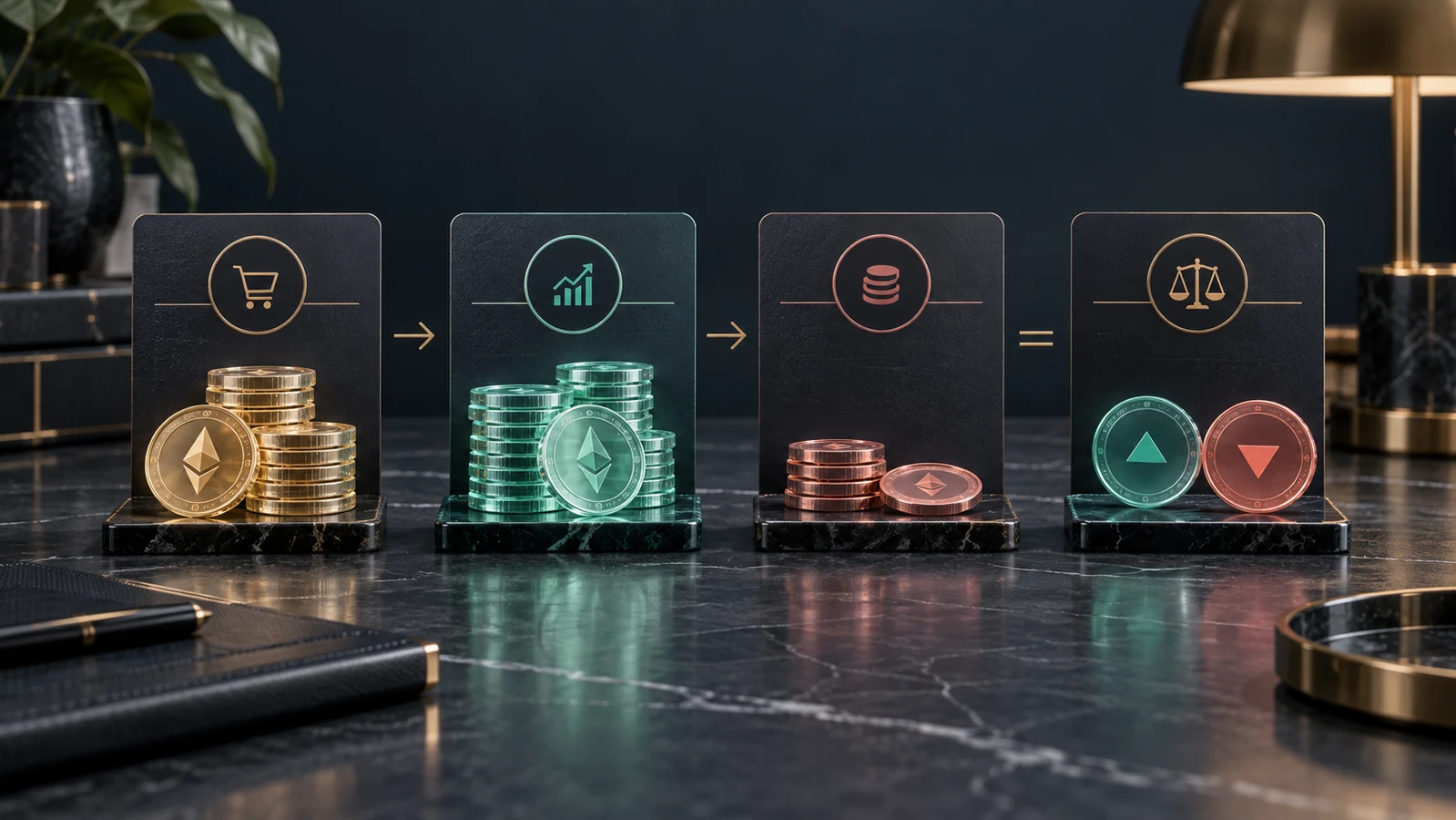
Which crypto transactions create gain or loss?
- Selling digital assets for dollars or another fiat currency.
- Trading one digital asset for another, including stablecoins.
- Using digital assets to buy goods or services.
- Paying certain transaction or network fees with digital assets.
- Transferring property rights through some DeFi or NFT transactions.
A transfer between wallets you control is generally not a sale. It still needs to be recorded so the original basis and holding period reach the destination wallet.
A simple calculation example
Suppose you bought 1 token for $4,000 and paid a $40 acquisition fee. Your starting basis is $4,040. Later, you sell the token for $6,000 and pay a $60 selling fee, leaving $5,940 of amount realized.
$5,940 amount realized minus $4,040 adjusted basis equals a $1,900 capital gain.
The arithmetic is simple. The evidence is what makes it defensible: acquisition confirmation, disposal record, fee treatment, lot selection, and a consistent USD valuation.
Short-term versus long-term crypto gains
A holding period of one year or less generally produces a short-term capital gain or loss. More than one year generally produces a long-term result. The count begins the day after acquisition and includes the day of disposition.
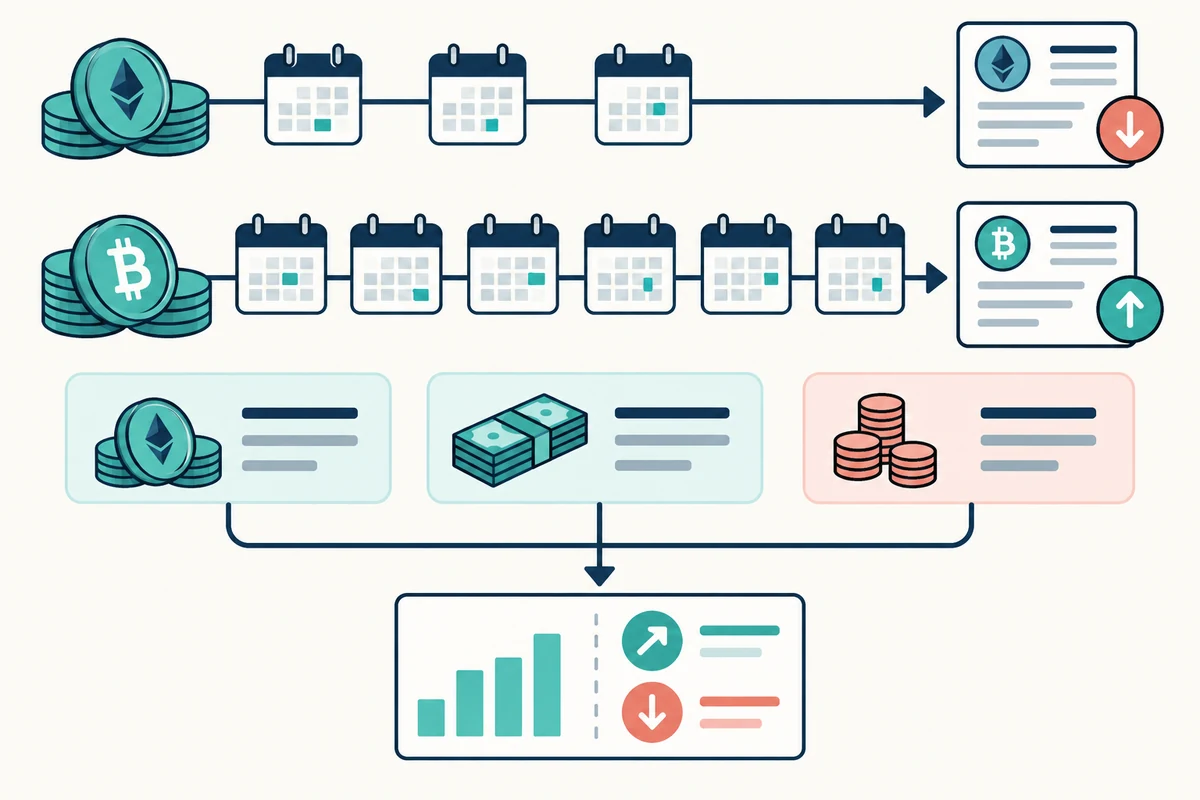
Long-term rates may be lower, but do not select a lot based on holding period alone. Compare the basis, loss position, income level, state impact, and other portfolio activity.
What belongs in crypto basis?
Basis generally starts with the cost to acquire the asset. The 2025 Form 8949 instructions state that digital-asset basis includes acquisition transaction fees, commissions, transfer taxes, and other acquisition costs.
Income items need a different trail. When staking or other rewards are included in income, the USD value reported as income generally establishes basis for those new units. A later sale is a second event.
Read the related guides on FIFO, HIFO, and specific identification and staking reward income.
Form 8949, Schedule D, and Form 1099-DA
Individuals generally report digital-asset capital dispositions on Form 8949 using the digital-asset checkbox groups, then carry subtotals to Schedule D. The form separates short-term from long-term transactions.
Form 1099-DA can report broker information, but it may not supply complete basis or holding-period data for every transaction. Reconcile the form to your transaction ledger rather than accepting reported proceeds as taxable gain.
Proceeds are not profit. Reporting gross proceeds as gain ignores basis and can materially overstate tax.
A practical reconciliation checklist
- Inventory every exchange, wallet, chain, and account.
- Import raw histories and retain the original files.
- Remove verified self-transfers before classifying income and disposals.
- Fill missing acquisition dates, values, fees, and basis.
- Apply supported lot identification within each wallet or account.
- Reconcile annual totals to Forms 1099-DA and other statements.
- Review each Form 8949 line or an auditable transaction schedule.
CoinLedger
A reporting option for organizing transaction histories and preparing disposal schedules.
ZenLedger
Another reporting option to test against your actual source records and wallet inventory.
Related Bugaboo guides
- DeFi taxes and transaction records
- Crypto exchange bankruptcy recoveries
- Crypto tax reconciliation services
Frequently asked questions
Is swapping crypto taxable?
Generally, yes. Exchanging one digital asset for another usually disposes of the asset surrendered and starts a new basis record for the asset received.
Are crypto gains based on proceeds or profit?
Gain is not gross proceeds. It is generally amount realized minus the adjusted basis of the disposed units.
When is a crypto gain long term?
Generally, when the disposed lot was held for more than one year. The count begins the day after acquisition.
Is a transfer between my own wallets taxable?
Generally, no. Preserve the original basis and holding period, and review any fee paid with digital assets as a separate possible disposition.
Does Form 1099-DA show my full taxable gain?
Not necessarily. It may report proceeds without complete basis or holding-period information, so it must be reconciled to your records.
Sources reviewed
Fact-checked September 9, 2026 against the IRS digital-asset FAQs, Form 8949 instructions, Publication 544, and the 2026 Form 1099-DA instructions.
Find the missing basis before filing
The Diagnostic identifies missing history, unsupported transfers, and basis problems, then scopes any separate reconstruction work. It does not perform the cleanup itself.